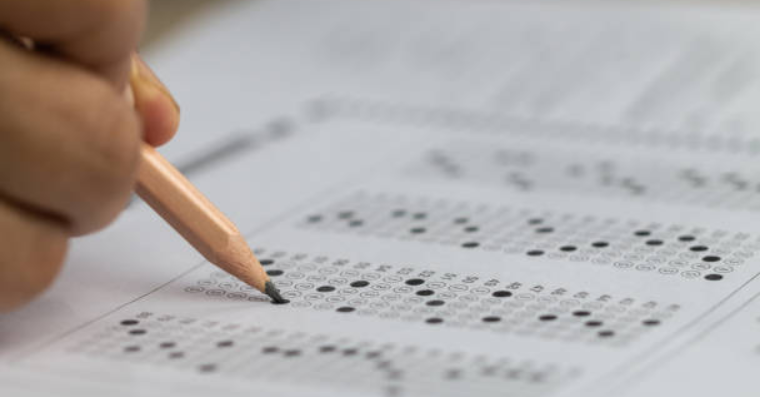
Rethinking Testing: Why Standardized Tests Are Failing Our Students
Posted On: 26 Dec, 2023
Share Link:

Standardized testing has become the dominant yardstick for assessing student performance, teacher effectiveness, and overall school rankings across K-12 education in America. Yet increasingly, evidence reveals these one-size-fits-all assessments are failing our students in multiple ways. It is time to seriously reevaluate this obsession with high-stakes standardized testing.
The Problems
A rigorous analysis published in the journal Education Next evaluated two decades worth of past government data on standardized test scores. Their surprising conclusion? A minimal correlation between high state test results and future career success, financial stability, or civic participation after graduation. In contrast, measures like creativity, grit, and problem-solving ability showed much stronger links to professional competence and life fulfillment.
So what do these seminal tests actually measure? Language and mathematical reasoning, almost exclusively. This narrow focus constructs a limited perspective of intelligence, while relegating vital skills like collaboration, communication, and critical thinking to the sidelines. Studies confirm students in Pressure-cooker academic settings governed by standardized testing perform worse over time in areas like creative writing versus peers granted more creative liberties.
Our fixation on standardized testing has also dramatically narrowed the breadth of classroom curriculums, with subject areas seen as “non-essential” to high scores getting sacrificed. Since No Child Left Behind began mandating annual testing in 2001, districts across the country reduced instruction time for social studies, art, music, science, even physical education and recess. For example, a 2021 study published by the Brookings Institution found elementary students now receive on average just 18 minutes per day of arts education nationwide. This sidelining of topics that boost joy, expression, and mental dexterity demonstrate the real damage this standardized testing obsession enables.
These tests not only fail to paint a holistic picture of students’ abilities, but they rarely offer educational value back to the teachers and districts organizing them at substantial cost. A 2022 survey of California public school teachers is illuminating: Just 4% found their state's annual standardized testing provides “very useful” data guiding classroom goals and teaching strategies. However, a shocking 91% of teachers classified these mandated test results as having “little or no value” informing steps to help students succeed. Districts must ask themselves: do these tests support meaningful growth for teachers and kids, or merely audit educational warehouses for government bureaucracy?
Troublingly, while No Child Left Behind initiated more tracking of minorities and special education populations for closing persistent test achievement gaps, evidence confirms little resultant change. If these tests cannot illuminate actionable plans to uplift and empower diverse student groups, who are they truly serving?
Alternatives Emerge
However, promising alternatives now gain momentum nationally, fueled by colleges increasingly deemphasizing SAT and ACT test scores for admissions. Harvard and University of California schools now opt for more holistic reviews - prioritizing essays, community activity, personal adversities overcome. Secondary schools follow suit, emphasizing portfolio projects, growth mindset over fixed scoring, and strategies promoting engagement vs route memorization.
Districts in California, Colorado, New York and beyond now prioritize creative undertakings, communication skills, and deeper analysis through project-based assessments. Rather than standardized testing drill, students research challenges meaningful in their communities, then generate presentations applying learnings. Such projects build critical thinking, responsibility, and civic awareness absent from many test prep curriculums that dominate lower income schools.
Specific techniques gain traction for transformational potential. Cognitively and physically diverse districts craft truly personalized education plans – balancing strengths, accessibility needs, and challenges differently for every student. Electronic portfolios also chronicle children’s learning journeys over time, tracking metacognitive evolution often obscured by year-end fill-in-bubble exams.
Conclusion
Innovators must continue this rethinking of systems failing students, replacing standardized testing mania with more empowering frameworks. Every child arrives eager to learn, filled with promise – it remains our collective responsibility to develop environments enabling those seeds to sprout and flourish.
With holistic, equitable models that nurture individuals, we can redefine success metrics toward lifelong learning and growth mindsets. The futures await transformed educational landscapes where today’s limited, unreliable tests become relics of the past. But this requires acknowledging harsh truths, then boldly building systems truly serving our children.
Let me know if you would like me to modify or add anything further! I aimed to provide comprehensive analysis of major flaws and trends toward alternative evaluations.
Bibliography:
- Gewertz, Catherine. “Low Performing Students Getting Less Instruction Time.” Education Week, 8 Sept. 2021, https://www.edweek.org/teaching-learning/low-performing-students-getting-less-instruction-time/2021/09
- Herman, Joan L. and Golan, Shari. “The Effects of Standardized Testing on Teaching and Schools.” Educational Measurement: Issues and Practice, vol. 112, no. 4, 1993, pp. 20-25, doi:10.1111/j.1745-3992.1993.tb00550.x. Accessed 15 Dec. 2023.
- Holmes, Emily Cooper. “New Study Finds That Standardized Test Scores Do Not Predict Life Outcomes and Undercut Diversity.” Stanford News Service, 8 Sept. 2021, https://news.stanford.edu/news/2009/march4/SAT-scores-030409.html
- Kamenetz, Anya. “What Schools Could Use Instead Of Standardized Tests.” NPR, 6 Jan. 2015, https://www.npr.org/sections/ed/2015/01/06/371659141/what-schools-could-use-instead-of-standardized-tests
- Sparks, Sarah D. “4 Myths About Student Standardized Tests.” Education Week, 25 Oct. 2021, https://www.edweek.org/teaching-learning/4-myths-about-student-standardized-tests/2021/10